
How Did Raleigh, NC Get Its Name and Who Was Sir Walter Raleigh?
We often stroll through Raleigh’s charming streets without thinking about its history. Many visitors ask how did Raleigh NC get its name. This question leads us on a journey back in time.
This tale connects our modern city to a legendary figure from the Elizabethan era. It’s a story of how our Southern hub is linked to history.
To grasp our identity, we must explore Sir Walter Raleigh history. He was a man of many talents. He served as a soldier, courtier, and writer under Queen Elizabeth I.
You might wonder, who was Sir Walter Raleigh explorer? He was a daring adventurer. He supported early English colonization in the New World.
His vision shaped the future of American colonies before our city was even thought of. By learning about his life, we appreciate our community’s heritage more. Let’s explore the rich legacy of this iconic historical figure.
- The city honors a famous Elizabethan adventurer.
- Sir Walter Raleigh was a key figure in early English exploration.
- Understanding this history connects us to our Southern roots.
The Search for a Capital: How Did Raleigh NC Get Its Name
To understand the origin of Raleigh name, we must look back at the late 18th century. After the American Revolution, North Carolina needed a stable government. Choosing a capital was a big challenge.
The Need for a Centralized Location
The state government didn’t have a permanent home after the war. They traveled between towns like Hillsborough and Fayetteville. This made things hard for everyone.
Leaders knew a centralized seat of government was key for unity. They wanted a place easy for everyone to reach. This led to the search for a permanent capital city.
Selecting the Site of Wake Courthouse
The General Assembly looked at the central region of the state. They picked a spot near the Wake County courthouse. It was perfect for balancing the state’s needs.
By choosing this area, they aimed to grow the interior of North Carolina. The land was bought, and plans were made to turn it into a political hub. This was a pivotal moment for the state.
The Legislative Decision to Honor an Explorer
On December 31, 1792, the city was officially named. The legislators honored Sir Walter Raleigh, an English explorer. This choice is interesting, given Raleigh never visited the colony he sponsored.
Despite never being there, Raleigh’s legacy was highly respected. Naming the capital after him honored the state’s English roots. It was a lasting tribute to Raleigh’s vision of English settlements in the New World.
The Life and Legacy of Sir Walter Raleigh
Many know the name Raleigh, but who was the man behind it? He was a soldier, poet, and courtier all in one. To understand Sir Walter Raleigh history, we must see his quest to spread English influence worldwide.
Early Years and Rise in the Elizabethan Court
He was born in Devon, England, to a humble family. Yet, his intelligence and charm quickly won over Queen Elizabeth I. He became a trusted advisor and favorite in the royal court.
His rise was swift, thanks to his wit and political savvy. He pushed for England to explore beyond its borders.
The Visionary Explorer and Colonizer
So, who was Sir Walter Raleigh explorer in history? He dreamed big for the British Empire. He believed in overseas colonies to boost England’s power and resources.
The Roanoke Colony Expeditions
His most famous effort was in what’s now North Carolina. These bold and ambitious attempts were tragic. Yet, they sparked English interest in the New World.
The Search for El Dorado
Later, he chased the legend of a city of gold in South America. He sailed to Guiana, seeking El Dorado. Though he didn’t find gold, his detailed journals and maps helped future explorers.
The Complex Relationship Between the Explorer and the Crown
The journey to power is often filled with glory and sudden defeat. In the 16th century, navigating politics was a constant challenge. It required vigilance and a careful approach.
The relationship between a monarch and a courtier was never stable. One wrong move could mean losing all influence.
Favor and Disfavor Under Queen Elizabeth I
Sir Walter Raleigh rose quickly in the Elizabethan court, becoming a trusted advisor. He was ambitious and sought the Queen’s attention.
But, his career took a sharp turn when he secretly married a lady-in-waiting. This act of defiance broke the Queen’s trust in him.
The Queen saw his marriage as a betrayal of her authority. Raleigh lost favor and his privileges were taken away.
Imprisonment and the Tower of London
Raleigh’s later years were marked by disgrace and imprisonment. He spent time in the Tower of London, a symbol of royal displeasure.
Being in the Tower was not just a physical punishment. It was a public sign that Raleigh’s influence had faded.
Despite these challenges, Raleigh remained determined. He used his time in prison to write and plan new adventures.
The Final Years and Execution
The start of King James I’s reign brought new dangers for Raleigh. He faced trumped-up charges of treason that overshadowed his final years.
These accusations were politically motivated, aimed at removing Raleigh as a threat. The trial was quick, leaving little room for defense.
In the end, Raleigh was executed at Old Palace Yard. His death shows the dangerous nature of court politics during that time.
Why North Carolina Chose to Remember Sir Walter Raleigh
The story of the origin of Raleigh name shows a deep wish to connect with the past. By naming the state after him, leaders wanted to honor Raleigh’s vision of English settlement in the New World. This choice was more than just a name; it was a way to keep history alive.
The Symbolism of the Lost Colony
The link to the “Lost Colony” of Roanoke is a key part of our identity. Raleigh sponsored these early trips, setting the stage for more exploration. Though these settlements disappeared, they symbolize the courageous spirit of discovery that shaped our history.
Establishing a Connection to English Roots
By naming the capital after Raleigh, the young state showed its English roots. This connection was important as the nation found its own identity. Our symbols today reflect our enduring ties to our cultural origins.
The Evolution of the City from Wilderness to Capital
The city has grown a lot from its early days near a tavern. Its growth into a busy government center shows the state’s progress. Knowing the origin of Raleigh name helps us see how far we’ve come while staying true to our roots.
Reflecting on the Enduring Legacy of the City and Its Namesake
Modern Raleigh is a bustling center of innovation, far from the 18th-century swamps. It has grown into a hub for technology and education, keeping its roots strong. Looking into Raleigh’s naming history gives us a special view of this growth.
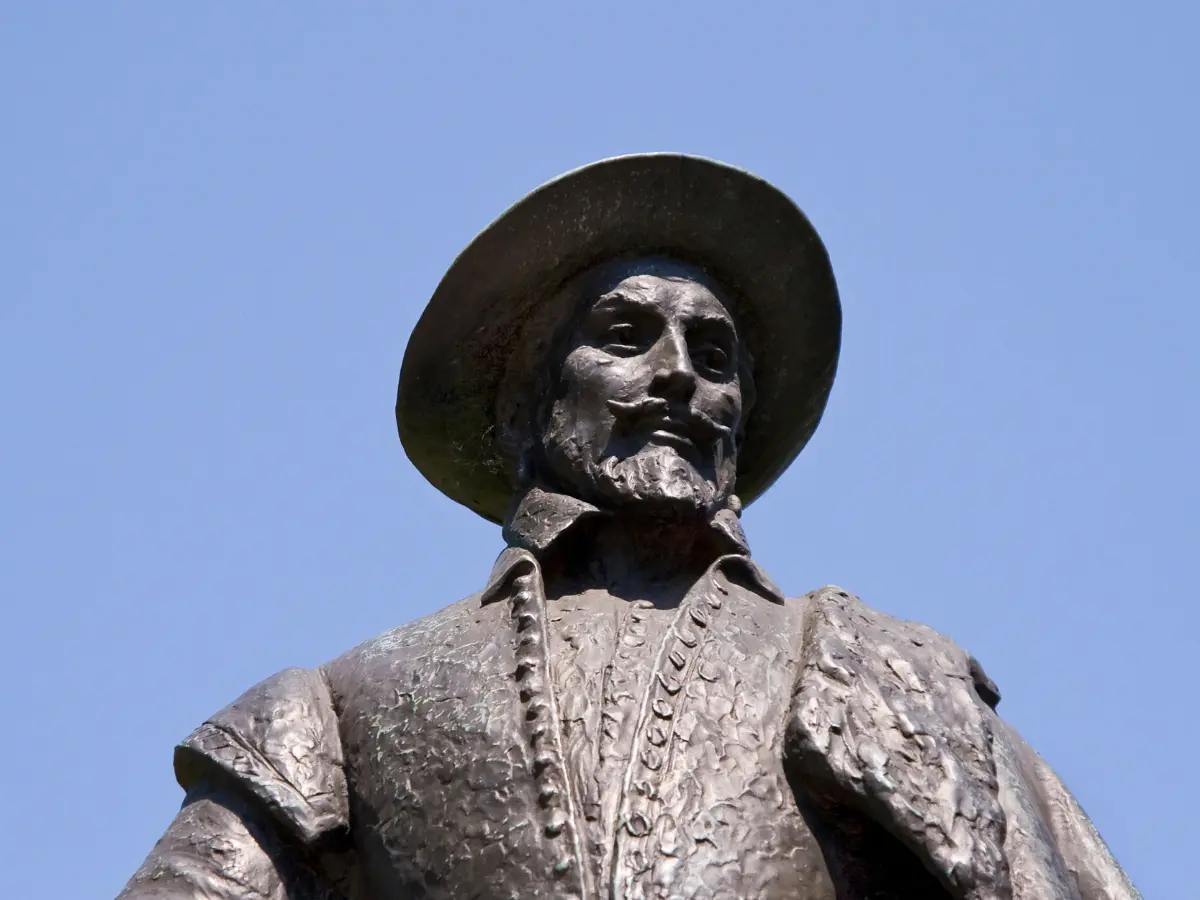
The bronze statue of Sir Walter Raleigh outside the Raleigh Convention Center reminds us of our adventurous past. It connects our identity to the Elizabethan era. This statue links our history to our current status as the Oak City.
We keep the spirit of curiosity that Sir Walter Raleigh had alive today. Our community values both our history and looking to the future. By exploring Raleigh’s naming history, we see how a city honors its namesake while moving forward.
What parts of Raleigh’s history do you find most interesting? We want to hear how our local heritage impacts your life in North Carolina. Your thoughts help tell the story of our capital.