
What Is the History of the North Carolina State Capitol in Raleigh and How Did It Burn Down?
We often pass by grand monuments without knowing their stories. The iconic building in the city’s heart shows our strength. The NC State Capitol Raleigh history is one of dreams, loss, and victory.
Before the current building, a fire destroyed the old government house. This disaster made leaders rethink their plans. It marked a turning point, making the town the permanent government seat.
Let’s look back at those key years. By seeing how our ancestors dealt with loss, we value our public institutions more. Join us as we explore the secrets in these walls. Discover how a single fire changed our local history.
The Origins of the NC State Capitol Raleigh History
The NC State Capitol Raleigh history started long before the first stone was laid. The young state didn’t have a fixed place for its legislative sessions. Lawmakers often traveled between towns to do their work.
This wandering lifestyle made things hard for government officials. They knew a central place was needed for stability and efficiency. This was a time of change and growth for the state.
The Search for a Permanent Seat of Government
Early leaders saw a permanent capital as a sign of the state’s strength. They looked at different places, considering how easy they were to get to and their political power. Finding a central site was key to bringing together North Carolina’s diverse regions.
The legislature chose a spot that was easy for representatives to get to. This choice was after much debate and competition between regions. The aim was to give the state’s democracy a lasting home.
Choosing the Site in Raleigh
In 1792, the state bought land in Wake County for the new capital. This spot was picked for its central location in the state. The development of this site is a key part of the NC State Capitol Raleigh history.
After securing the site, work started on the first State House for the General Assembly. This building was the government’s center for many years. The establishment of this capital laid the groundwork for North Carolina’s political future.
The First State House and Its Tragic Demise
Before the current granite building, a wooden State House stood in Raleigh. It was the heart of politics for many years. Knowing about this time helps us understand the North Carolina State Capitol’s history.
The Architectural Style of the Original Building
The first State House was built in the Federal style. It was simple but showed the growth of our state. Its wooden construction made it prone to fires.
The 1831 Fire: How the Building Burned Down
The 1831 fire was a major event in our state’s history. It happened in June and destroyed the building in hours. This disaster made us think about protecting our public buildings better.
The Role of the Workmen and the Melting Lead
The fire started during roof repairs. Workers were trying to add a fireproof roof. They used open fire pots to melt lead, which was a big mistake.
The Loss of the Canova Statue
The fire also destroyed a marble statue of George Washington. It was made by Antonio Canova, a famous Italian sculptor. Losing this statue was a huge loss for our culture, something we remember today.
Planning the New Capitol Building
After the old State House burned down, we set out to build a lasting monument for North Carolina. The destruction left a big gap that needed a strong and impressive solution. This was a key moment in North Carolina State Capitol history, calling for a vision of permanence and civic pride.
Commissioning the Design
To make the capitol reconstruction Raleigh project a success, we looked for the best architects. We chose the renowned New York firm of Town and Davis to lead the design. Their skill and ability to build strong structures made them perfect for this big job.
The architects aimed to build a government building that could stand up to the weather. They used fireproof construction methods, like stone and masonry, to avoid another disaster. This focus on lasting materials was key to our goal of a permanent government seat.
The Influence of Greek Revival Architecture
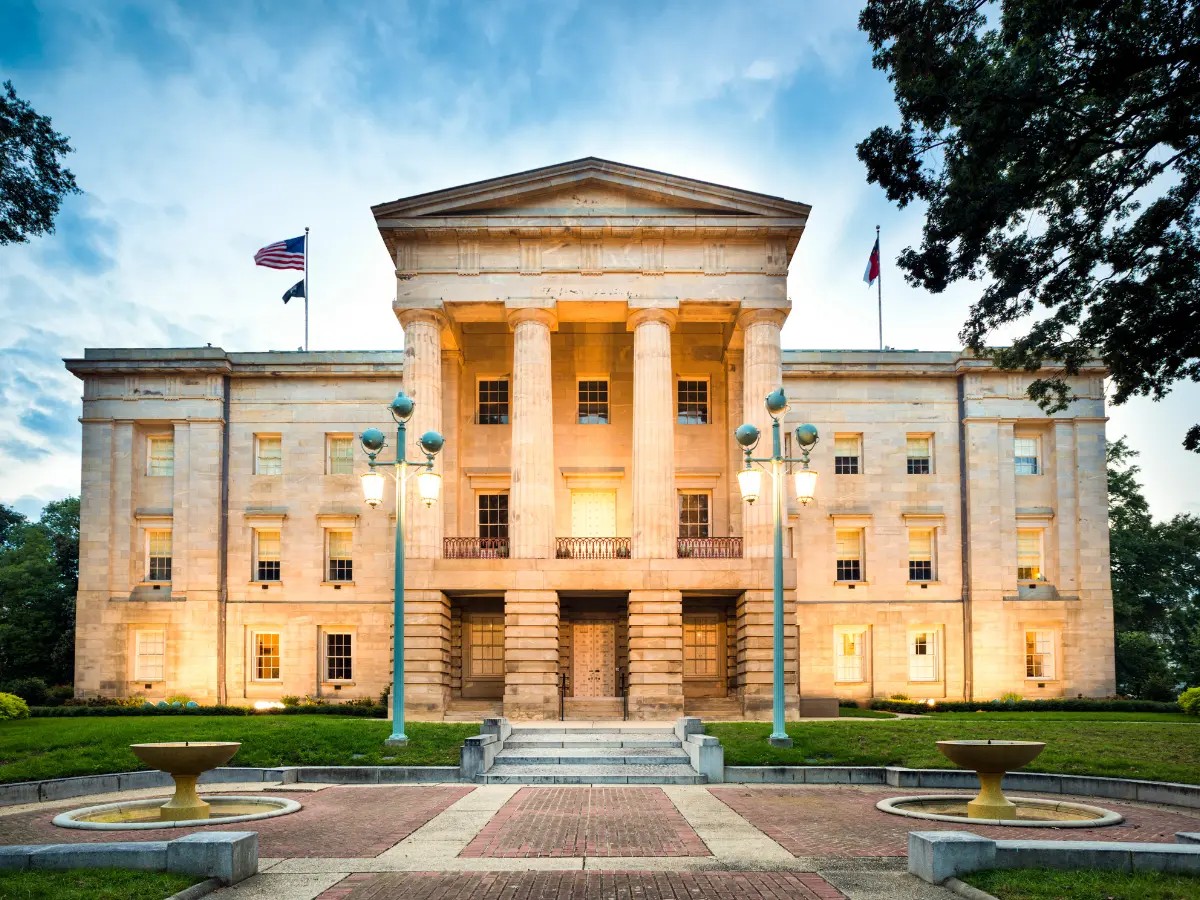
We picked the Greek Revival style to show our state’s growing strength and democratic values. This style was very popular back then, linking our young nation to the ancient roots of democracy. By choosing this style, we made sure our new capitol would be a timeless symbol of authority.
The design had big columns and balanced shapes, typical of Greek Revival. These features brought a sense of order and stability, important for our state’s identity. Through careful planning, we combined beauty and function in the heart of our capital city.
The Construction Process and Challenges
After the Raleigh capitol building fire, the state had to build a new structure that would last for many years. This huge task needed lots of resources and people. The new building shows the strength of those who worked hard to rebuild it.
The Role of Convict Labor and Skilled Artisans
The team working on the project was diverse. Skilled stonecutters and architects led the way, while convict laborers did the heavy work. This mix of talent and hard work was key to meeting the project’s tight deadlines.
The workers faced tough conditions while working with the big stones. The teamwork between the master builders and the laborers made sure every detail was perfect. Their hard work is seen in the building’s precise masonry today.
The Use of Local Raleigh Granite
Choosing the right materials was a big decision. The team decided to use local granite from our area. Using local stone made the building stronger and saved money on transportation costs.
Getting the granite to the site was a big challenge. They built a temporary railroad to move the blocks. This was a smart move that helped the project succeed.
Financial Struggles and Delays
Even with good planning, money issues affected the project. The state often had trouble finding enough money to keep things moving. These financial problems caused long delays, testing everyone’s patience.
Keeping the budget in check while staying true to the design was a big challenge. The commissioners had to find a balance between their vision and the state’s budget. Their hard work paid off, creating a building that honors our history.
Architectural Significance and Design Features
Walking through the North Carolina State Capitol, you see a design that has stayed the same for nearly two centuries. It’s a premier example of Greek Revival architecture in the United States. You can follow the same paths as early lawmakers.
The Rotunda and the Legislative Chambers
The rotunda is the heart of the building. It’s a grand space that connects all parts of the Capitol. The soaring dome above the rotunda brings in light and openness, a marvel for its time.
The two main legislative chambers are on either side of the rotunda. They were built with acoustics and visibility in mind. This design lets us see how debates were conducted in the 1800s.
The Symbolism of the Interior Layout
The interior was designed to show the democratic values of the time. The layout shows the balance of power and transparency needed in government. It was made to be accessible to the people of North Carolina.
The Capitol’s historical layout makes it truly special. It’s not just rooms; it’s a tangible representation of our state’s political heritage. Keeping it this way lets future generations connect with our democracy’s roots.
The Capitol Through the Civil War and Beyond
The North Carolina State Capitol saw big changes in our nation’s history. It stood strong as our democracy grew. Its walls echo with debates that shaped our future.
Serving as a Hub During Turbulent Times
The Capitol was key during the American Civil War. It was the administrative center for big decisions. It was a busy place, full of legislators, military leaders, and citizens.
Even in chaos, the Capitol kept our government going. It showed North Carolina’s strength. The resilience of the structure was key during tough times.
Evolution of the Building in the Twentieth Century
In the twentieth century, our government grew. The Capitol couldn’t keep up. So, new buildings were built nearby, changing the Capitol’s role.
Now, the Capitol is a museum and a historic site. It’s not just an office. It’s a link to our past, showing our political heritage.
Preservation Efforts and Modern Restoration
We take protecting the iconic building very seriously. Time and weather can damage even the strongest stone structures. Regular upkeep keeps the site safe and open for all visitors.
Maintaining the Integrity of the Structure
In recent years, we’ve made big investments in the Capitol. A multi-million dollar investment was made to fix the roof and dome. This prevents water damage and keeps the building looking original.
Our team works with preservation experts to use materials that match the historic granite and copper. We focus on long-term stability over quick fixes. This ensures the building will stand strong for many years.
The Importance of Protecting North Carolina Government Building History
Protecting this site is more than just about the building. It’s about honoring our state’s political and architectural history. Studying the NC government building history helps us appreciate the decisions made here.
We believe keeping this history alive connects us to our past. By maintaining the Capitol, we give future generations a glimpse into our democracy’s growth. Protecting our NC government building history is a priority for those who value North Carolina’s legacy.
Reflecting on the Legacy of the Capitol
The North Carolina State Capitol is a symbol of our state’s strong spirit. It was rebuilt after a fire, showing our commitment to democracy. This building is a key part of our NC government history.
Visit Raleigh to see its beauty for yourself. Walking through, you feel connected to the past. You’ll see the skill that made it a National Historic Landmark. Keeping this place alive helps us teach our future about our government’s roots.
Learning about this landmark shows us why we must preserve it. We hope you’re inspired to explore more of our history. Share your favorite parts or your visit stories with us.